- Each node can have at-most 2 child nodes.
Node structure of binary tree
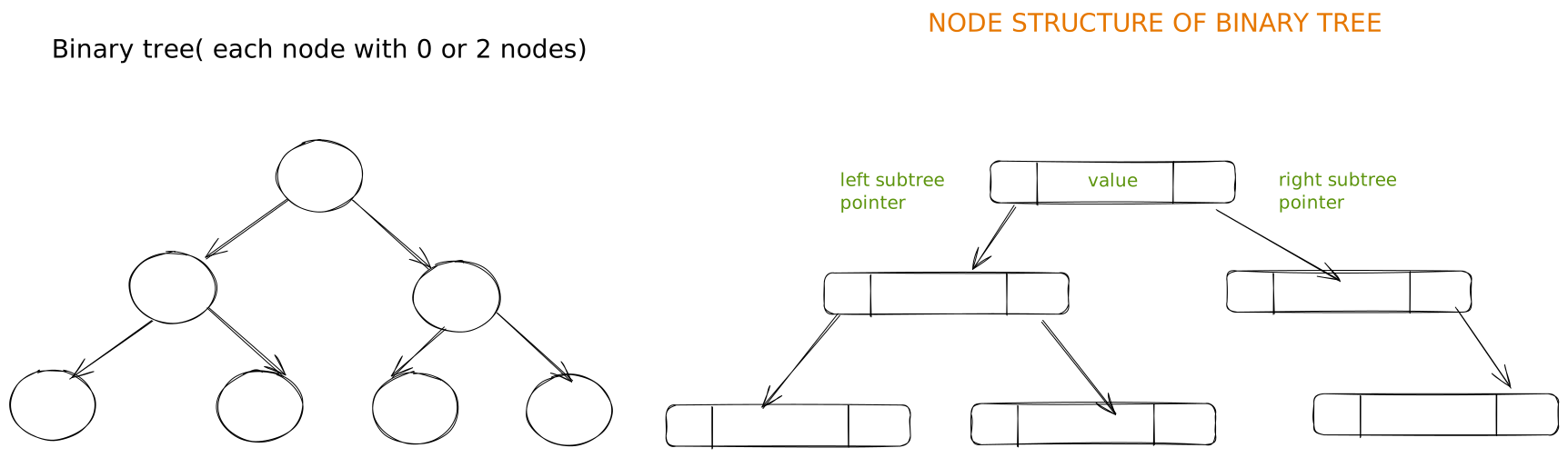
Code to create a node
struct Node{
 int data;
 Node* left;
 Node* right;
}
Types of binary tree
- strict / proper binary tree
- full binary tree
- 0 or 2 children
- Complete binary tree
- all levels except last one are completely filled
- last level has all keys as much left as possible
- Perfect binary tree
- all levels are completely filled
- all internal nodes have 2 children
- all leaf nodes are at same level
- no of leaf nodes= no.of internal nodes + 1
- Balanced Binary tree
- height of tree is log n where n is the no of nodes
- example: AVL trees , Red black trees
- AVL trees : |height of left subtree - height of right subtree| ⇐1
- Good performance wise : for search insert and delete
- Degenerate tree / sparse tree
- all internal nodes have only a single children
- if left nodes have single children tree : left skewed
- if right nodes have single children tree : right skewed
levels and max nodes relation in binary tree
- levels numbering start from 0
- max number of nodes on each level = 2^(level)
no of nodes and height relation
n: total no. of nodes in a Binary tree h: height of binary tree
n= 2^0 + 2^1 + 2^2 + 2^3 + ------ + 2
h=log2(n+1)-1 minimum height of the tree
if you are given n nodes then then the level= floor(log2(n)) i.e integer of log2(n)
in general we focus to make a tree complete binary tree so as to maintain the searching complexity to be O(logn) as search space reduces at each level by half
2 methods to implement a binary tree
- using node struct
- using arrays ( only for complete binary tree)
- if the node is stored at ith index
- the left child gets stored at 2i+1th
- right child gets stored at 2i+2th
- if the node is stored at ith index